


Table of Contents
Introduction: Why Saving Money Feels Hard
Most people do not struggle with earning money. The real challenge is keeping it.
And it is not because people are irresponsible or careless with their spending.
Modern life makes spending incredibly easy. One click and a package is on the way. Subscriptions renew quietly in the background. Food delivery shows up faster than you can cook. Prices rise while salaries stay the same.
Here are the top 10 brilliant money saving tips that actually help people save in 2026.
If you have ever checked your bank balance and thought,
“How did my entire paycheck disappear?”
you are not alone.
The good news is that saving money does not require extreme discipline or cutting out everything you love. What you really need is a few smart, realistic money habits that work for everyday life.

The Top 10 Brilliant Money Saving Tips
Below are ten practical and psychologically smart money saving strategies you can start using today.
1. Use the 30 30 Rule Before You Buy Anything
The best way to stop impulse spending is to give yourself time.
The 30 30 rule says that if something costs more than 30 dollars, wait 30 hours before buying it.
You do not say no. You simply wait.
Most purchases lose their emotional pull once the excitement fades.
Example:
You see a 60 dollar shirt online. You feel the urge to buy it immediately.
You wait 30 hours.
Suddenly it does not feel necessary anymore. You save money without feeling restricted.
2. Switch to a Zero Leak Budget
A zero leak budget is different from a strict zero based budget.
Instead of forcing every dollar into a category, you only fix the areas where money leaks out.
These leaks usually include food delivery, random Amazon buys, unused subscriptions, and emotional shopping.
By repairing the leaks, you save more without changing your entire lifestyle.
3. Automate Your Savings on Payday
If money stays in your main account, it will get spent.
Automation removes temptation.
On payday, automatically transfer a percentage of your income into separate accounts like savings, emergency fund, or a fun wallet.Saving becomes effortless because you save before you spend.
For a simple breakdown of how saving and investing work, you can check the U.S. Consumer Government resource here
4. Use the Price Per Use Formula
People waste more money on cheap items that break quickly than on quality items that last.
The formula is simple:
Price divided by expected uses equals real cost.
Example:
A 40 dollar pair of shoes that lasts four months is more expensive per wear than a 90 dollar pair that lasts one and a half years.
Better quality often saves more money over time.
5. Try the 48 Hour Emotional Spending Delay
Most emotional purchases come from stress, boredom, or pressure.
When you feel tempted to buy something for comfort, wait 48 hours.
Once the emotion settles, the desire usually disappears.
This method prevents regret spending without forcing you to give up the things you genuinely want.

6. Create a Bill Calendar to Avoid Hidden Fees
Late fees and surprise charges quietly drain a lot of money.
A bill calendar helps you avoid them by listing each due date in one place. Set reminders five days before and one day before each bill.
You can also batch payments on a specific weekly day or set certain bills to auto pay.
This simple habit can save hundreds of dollars a year.
7. Use the Two Category Cutting Method
Trying to cut every expense is overwhelming and unrealistic.
Instead, cut costs in only two categories. Choose the one you overspend on and the one that does not add real happiness.
Common choices include food delivery, outings, subscriptions, or random shopping.
This method is easier to maintain and still creates meaningful savings.
8. Build a Financial Buffer with Micro Savings
Small amounts saved regularly add up faster than people realize.
Try saving five dollars every time you feel like ordering food, one dollar every time you scroll social media, or the round up from daily purchases.
Micro savings create momentum and help build a financial cushion for emergencies or goals.
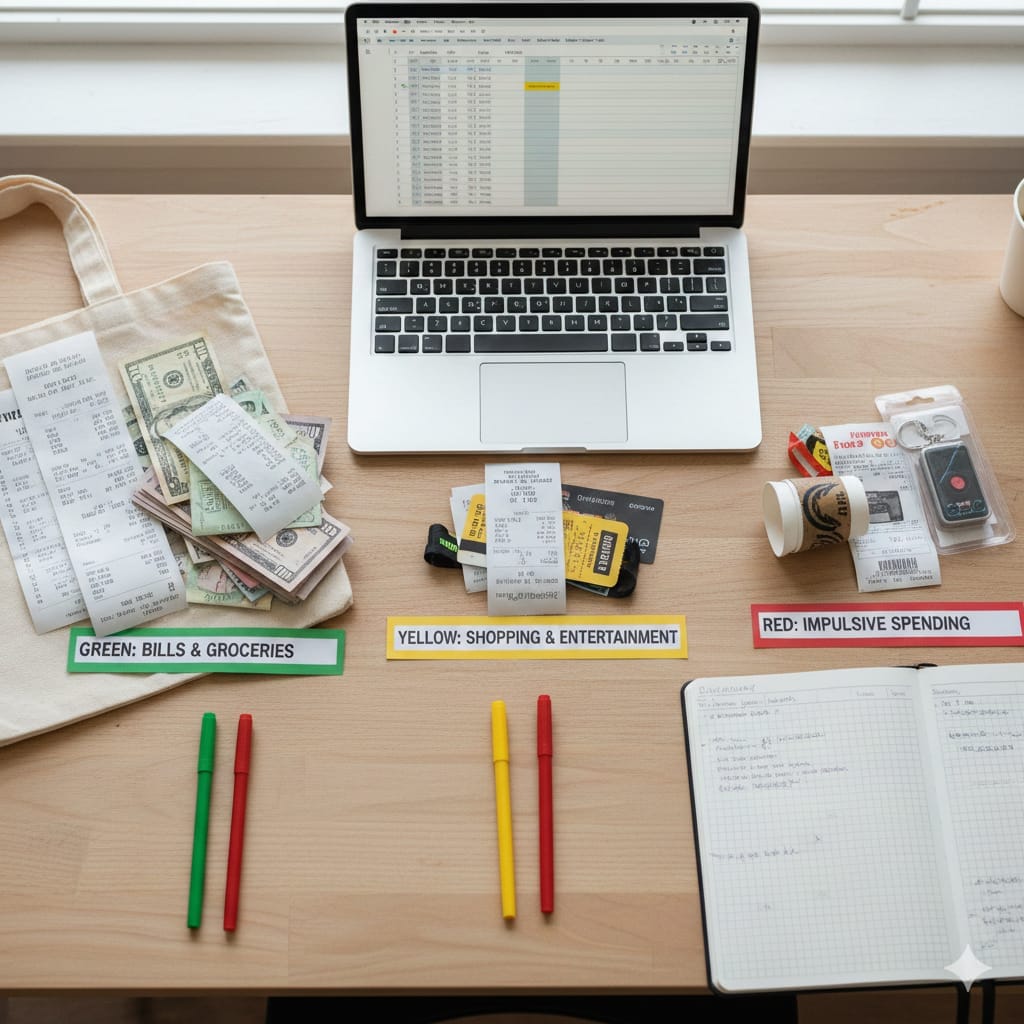
9. Track Your Spending with the Three Color Method
Use colors to quickly understand where your money goes.
Green: essentials like rent, groceries, and bills
Yellow: flexible spending like restaurants, shopping, and entertainment
Red: unnecessary or impulsive spending
This method gives you instant clarity and shows exactly where change is needed.
10. Follow the One Percent Saving Rule
Save one percent of your income each month.
If you earn two thousand dollars, save twenty. Next month save twenty one. The month after that, save twenty two.
This gradual increase builds a strong saving habit without feeling heavy.
Why These Tips Work
These strategies work because they are rooted in human psychology, not strict rules.
They help you avoid emotional spending, reduce decision pressure, create structure, and build confidence through small wins.
Saving money becomes natural instead of stressful.
Real Life Examples
Example 1
Canceling just two unused subscriptions can save thirty to forty dollars a month, which adds up to more than four hundred dollars a year.
Example 2
Using the 48 hour delay prevented a shopper from spending one hundred twenty dollars on skincare they did not need.
Example 3
A person who saved one dollar every day while scrolling social media ended up with over three hundred sixty dollars by the end of the year.
Small wins build big results.
Actionable Steps: Start Saving More in Seven Days
Day 1: Identify your two overspending categories.
Day 2: Set up automatic savings for payday.
Day 3: Create your bill calendar.
Day 4: Apply the 30 30 rule to purchases.
Day 5: Use the price per use formula on your wishlist.
Day 6: Start the three color spending tracker.
Day 7: Begin the one percent saving rule.
FAQs
1. What is the simplest money saving tip for beginners
Start with the 30 30 rule. It is the easiest way to avoid impulse purchases.
2. How much money should I save each month
Start with one to five percent of your income. Increase it slowly as your confidence grows.
3. How do I save money on a low salary
Automate small savings, cut two spending categories, and avoid impulse purchases for a month.
4. Do these tips work for people who struggle with budgeting
Yes. These strategies focus on behavior and psychology, not complex budgeting rules.
5. What is the best way to stop emotional spending
Wait 48 hours before buying anything you want when you feel stressed or emotional.
6. Does micro saving make a real difference
Absolutely. Small amounts saved consistently grow into meaningful savings over time.
